Look a little closer.
Test lengthwise and crosswise stretch separately. Check recovery after repeated extension, opacity under tension and seam behaviour with the intended stitch.

Knitted constructions use connected yarn loops. For apparel development, the practical questions are how the sample stretches, returns to shape and behaves at the seam.
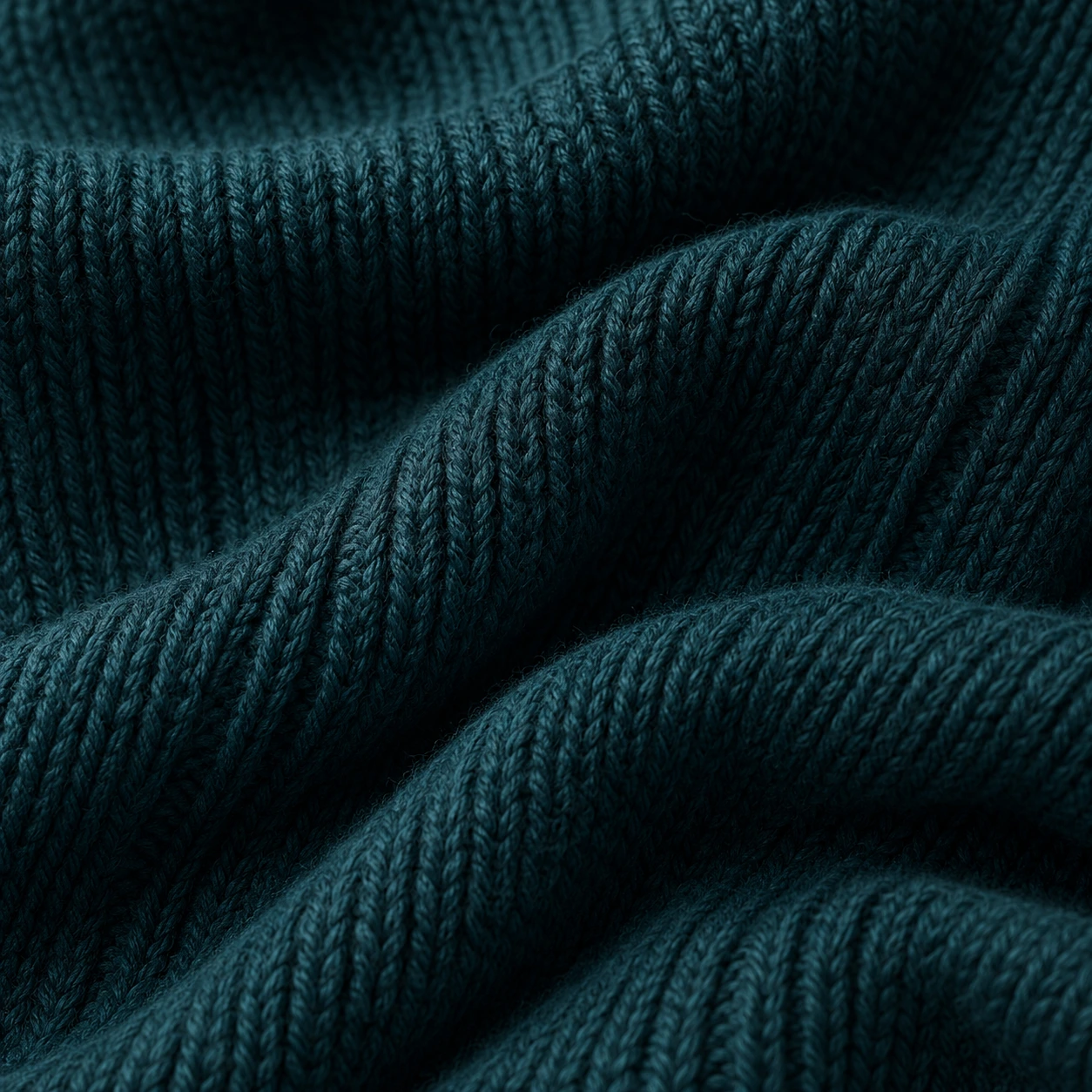
Representative textile detail. Actual articles vary in composition and finish.
Looped construction · movement · comfort-led design
Match the garment pattern to the sample’s actual movement. Consider necklines, cuffs and body panels individually rather than applying a single stretch assumption.
Test lengthwise and crosswise stretch separately. Check recovery after repeated extension, opacity under tension and seam behaviour with the intended stitch.
Evaluate laundering on a trial garment and measure it again after relaxation. Confirm the final care method and dimensional tolerances before production.
Send the article reference, garment type, colour direction, target quantity and destination. Ask for the confirmed technical sheet and assess a sewn sample before committing to bulk material.
Suggested references for discussion. Confirm the construction of the selected article with the team.
Share your fabric references, intended use and colour direction. Let’s build a clear starting point.